
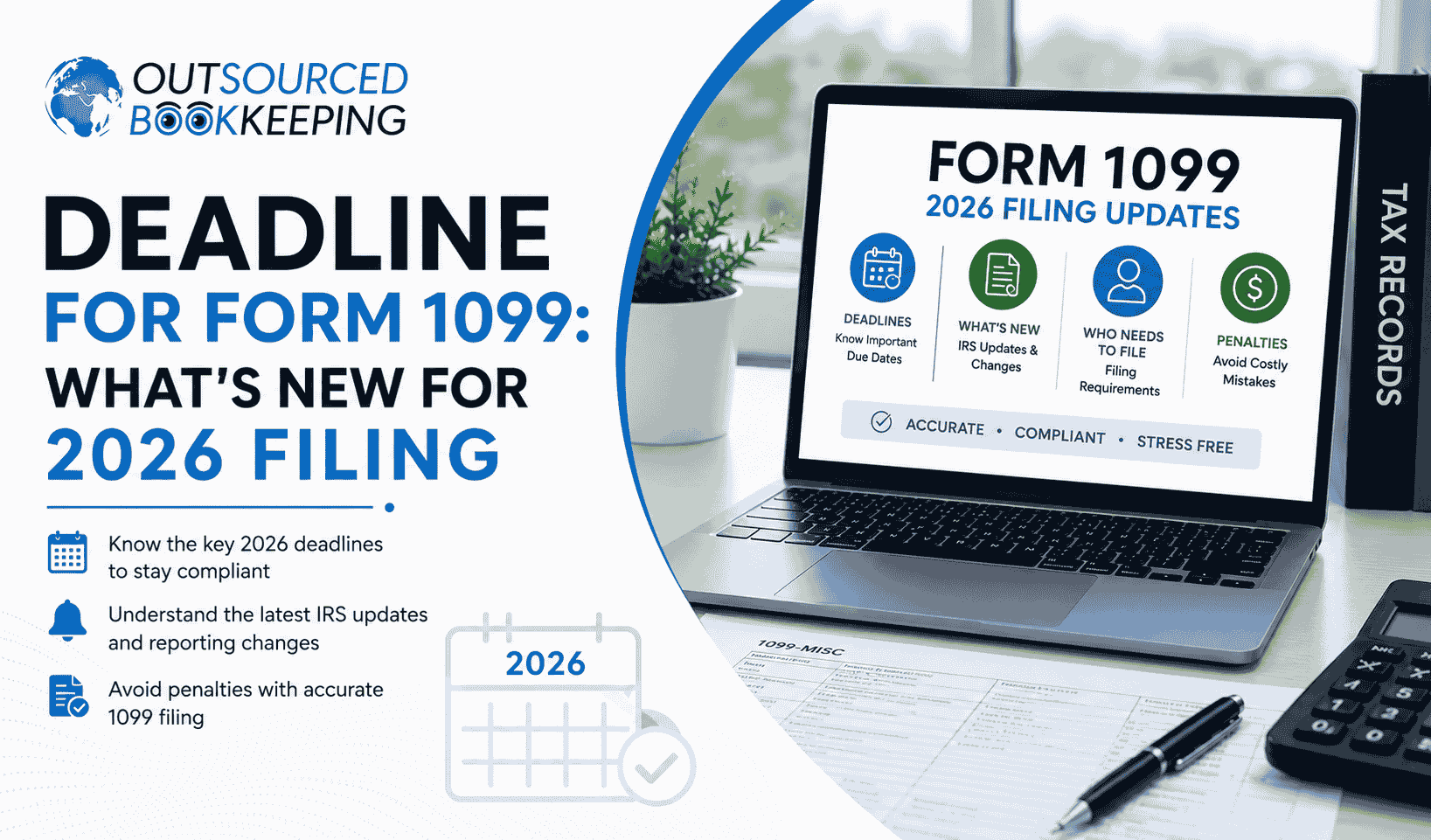
Deadline For Form 1099 is Approaching Fast, Are You Ready !!
Deadline For Form 1099: Every year it’s the same thing when summer ends and October rolls around. And then it’s all about deadlines and not growth. The 1099 season in June seems a long way off. Then it hits you like a truck in December. That gap matters for CPA firms and the businesses they serve. It’s where the preparation either happens quietly in advance or devolves into a bit of a scramble in January.
What the One Big Beautiful Bill Act Actually Changed
This year, a single law caused many of the changes in the 1099 season. The One Big Beautiful Bill Act (enacted July 4, 2025) changed much of the tax code. But the part that really matters regarding a 1099 is the reporting threshold.
What actually changed was
- The 1099-NEC threshold increased from $600 to $2,000 for payments made on or after January 1, 2026.
- Most of the 1099-MISC categories have moved to that same $2,000 threshold.
- The new backup withholding is also now tied to $2,000 instead of the old $600.
- In the coming years, the new threshold will be indexed to inflation, so it will not be frozen in time.
- A few specific categories, royalties among them, kept their own lower threshold and weren’t swept into the change.
The last one is the one people usually get confused about. That kind of assumption that “everything went to $2,000” is the kind of mistake that leaves you missing a form months later. For most categories, the threshold moved. But that doesn’t apply automatically to every one of them.
Why This Change Actually Matters
The old $600 threshold remained unchanged for decades. A number that made sense a long time ago has slowly morphed into something else. It generated a large number of small, one-off payments. The $650 landscaping job or that one-time repair that was just under the threshold. That wasn’t the kind of thing information reporting was meant to pull up.
What Changed, and What Hasn’t
For payments made in 2026, the Form 1099-NEC reporting threshold, as well as most 1099-MISC categories, increased to $2,000. But don’t take that to mean “less work.” And there are still lower thresholds for many payment types. Many states have tougher rules than the federal government does.
Here’s how the three ways most people cope actually stack up:
| Form | What It Reports | 2026 Threshold | Recipient Deadline | IRS Deadline |
| 1099-NEC | Payments to contractors and service vendors | $2,000 per payee/year (up from $600) | January 31 | January 31 (no paper/e-file split) |
| 1099-MISC | Rent, prizes, legal settlements, medical payments | $2,000 (royalties stay at $10) | January 31* | Feb 28 (paper)/Mar 31 (e-file) |
| 1099-K | Payments through apps and marketplaces | $20,000 and 200+ transactions | January 31 | March 31 (e-file) |
*There’s one exception to that 1099-MISC deadline you should know about. If the form reports substitute payments in place of dividends or interest (Box 8) or gross proceeds paid to an attorney (Box 10), the recipient copy is not due until February 15. The IRS filing deadline itself doesn’t change either way; only the date the recipient has to get their copy does.
Other things to know:
- If a deadline falls on a weekend or holiday, it is moved to the next business day. But seldom does it provide any real relief when the calendar turns to January.
- Other 1099 family forms follow the same general pattern with minor variations depending on what is being reported.
A quick fix can cost you $60 per form and up. From there, they climb fast—to several hundred dollars when a form is months late, or the IRS decides the miss was intentional. And here’s a rule that many smaller practices still handle by hand under pressure: If you have 10 or more information returns total, combining all form types (not per form type), electronic filing is mandatory.
Not All 1099s Are the Same Form
1099 is not one form. They are a whole family of forms. Each is directed to report a particular type of payment or transaction. Knowing which one applies can save you many headaches down the line.
- Form 1099-A reports acquired or abandoned secured property. Usually, this involves a mortgage where the lender has taken possession or the borrower has walked away.
- Form 1099-B is used by brokers and barter exchanges. It reports stock and security sales, cost basis, and whether the gain is short-term or long-term.
- Form 1099-C is used when a lender cancels or forgives debt for less than you owe. Usually, the canceled amount is taxable income, which can surprise some people.
- Form 1099-CAP goes to shareholders after a major corporate event. A merger or big restructuring, reporting whatever cash or stock they received because of it.
- Form 1099-INT reports interest income from banks and credit unions, even small amounts.
- Form 1099-DIV covers dividends and other investment distributions.
- Form 1099-R handles distributions from pensions, retirement accounts, and annuities.
Add 1099-NEC, 1099-MISC, and 1099-K, and you have a fairly detailed picture of non-wage income. That’s the image the IRS uses to double-check what appears on a person’s tax return. Misread any part of it, and a notice will likely follow.
Why Preparation Falls Apart Even When People Know Better
Here’s the interesting part. The dates are rarely unknown to practitioners. Everyone knows that January 31 is included. The real problem sits upstream of that.
The Data Problem
Over the course of a year, vendor lists go stale, W-9s go out of date, or payments are being processed in five different places at once: bank accounts, payment apps, credit cards, and client portals. It’s really hard to get all of that into one clean view of who actually got paid what. By December, the data you need to prepare accurate forms is scattered across systems, half-updated or awaiting year-end adjustments.
The Capacity Problem
That compounds quickly for CPA firms in particular. Clients want real guidance, sometimes full prep support. All of these developments are happening while the firm is also gearing up for tax season, dealing with extensions, and trying to keep monthly bookkeeping up to date for everyone else. Something inevitably gives, and it’s usually 1099 work that gets squeezed.
It’s a different but equally rough version of the same story for businesses that do their own bookkeeping. Without focused assistance, whoever is in charge of AP or bookkeeping ends up doing the entire job within a compressed timeframe. That’s exactly the kind of pressure that causes errors and missed forms.
The Usual Suspects
The same handful of issues show up every season:
- W-9s that are outdated or incomplete
- Payments distributed across systems that don’t communicate with each other
- Genuine confusion over who actually needs a 1099: corporations, attorneys, and medical providers trip people up constantly
- A last-minute rush while books are still actually open
- State filing rules are added on top of the federal ones.
Building a Season That Isn’t a Crisis
Those companies that make it through 1099 season without the usual chaos tend to treat it as something they keep up with the rest of the year. Not something you see in January. A few habits distinguish the calm firms from the scrambling ones:
- Keeping W-9 files current as new vendors come on, not waiting until year-end to chase them down
- Don’t let vendor payments pile up. Reconcile vendor payments on a regular rhythm.
- Having consistent coding in accounting software so that the totals are actually trustworthy when it comes time to create forms
- Determining early (well before December) whether forms are being done in-house, with software, or with outside help
It really helps to keep the monthly books clean here. When you categorize transactions correctly all year and keep vendor data current, the January process becomes a review. It’s not a reconstruction project that has to be built from scratch under a deadline.
How We Help With This
This is precisely the problem we designed our Tax Preparation Services to address: providing CPA firms and businesses with real capacity without the overhead of hiring permanent staff solely to survive one season.
We provide tax preparation services, including specific support for 1099 and W-2 preparation. That means pulling together the data, generating the forms, and packaging it up so your team has work to review, not a mess of data to sort through.
You keep full control over client communication and final sign-off. We take care of the volume and the detailed prep work that tends to slow everyone down at the most critical time.
For firms seeking more ongoing support, our Bookkeeping Service for CPAs keeps client ledgers current year-round. And when the 1099 season comes around, the data is not scattered. It’s already organized.
This approach cuts down on last-minute questions, incomplete vendor files, and the mismatched totals that can generate IRS notices months down the line.
All is under your own brand and adheres to your standards and templates. The goal is not to replace client relationships. It is removing a constant source of stress that has been bothering them.
The Real Cost of Waiting Another Week
Every week that passes without an actual plan increases the chances of a compressed, error-prone filing season hitting you. Clients who get late or incorrect forms lose confidence fast. Firms that scramble through January carry that same disruption straight into the busiest part of tax season. Penalties, amended filings, and the back-and-forth correspondence that follows all eat into time that could’ve gone toward the advisory work that actually grows a practice.
The flip side holds just as true. Teams that start reviewing vendor lists, confirming W-9s, and nailing down their preparation process back in the fall move through January with a lot less friction. They protect client relationships, cut down real penalty exposure, and free up bandwidth for work that actually matters.
The deadline itself isn’t moving. The only real variable left is how ready you’ll be when it shows up. Whether you need focused help getting through this season or a longer-term partnership that keeps things clean all year, this is a discussion worth having now. Don’t wait until December, when your options have already narrowed.
Schedule a consultation and walk through exactly where your current process stands, what the actual gaps are, and what a realistic way forward looks like.
About the Author
