
What Is CAM Reconciliation? Key Steps, Challenges, and Solutions for Commercial Properties
Every commercial property manager experiences the same pain. During the reconciliation season, a tenant receives a statement, and shortly after, the phone rings. This time, the question is about why their share for repaving the parking lot increased. Often, the number is in fact correct. However, there are times when someone missed a lease clause or miscoded an expense months back, and now it’s a mess to untangle. What is CAM reconciliation? It is the process of reviewing common area maintenance charges a commercial tenant actually paid in comparison with what they should have paid based on actual expenses rather than estimates. If you skip or rush the process, you’re either leaving money on the table or handing a tenant a bill that starts a fight nobody wanted.
The difficulty is primarily because, in practice, most people learn the finer points of this task only when they face pushback from an already disgruntled tenant. That’s according to their breakdown of the reconciliation process.

What Is CAM Reconciliation?
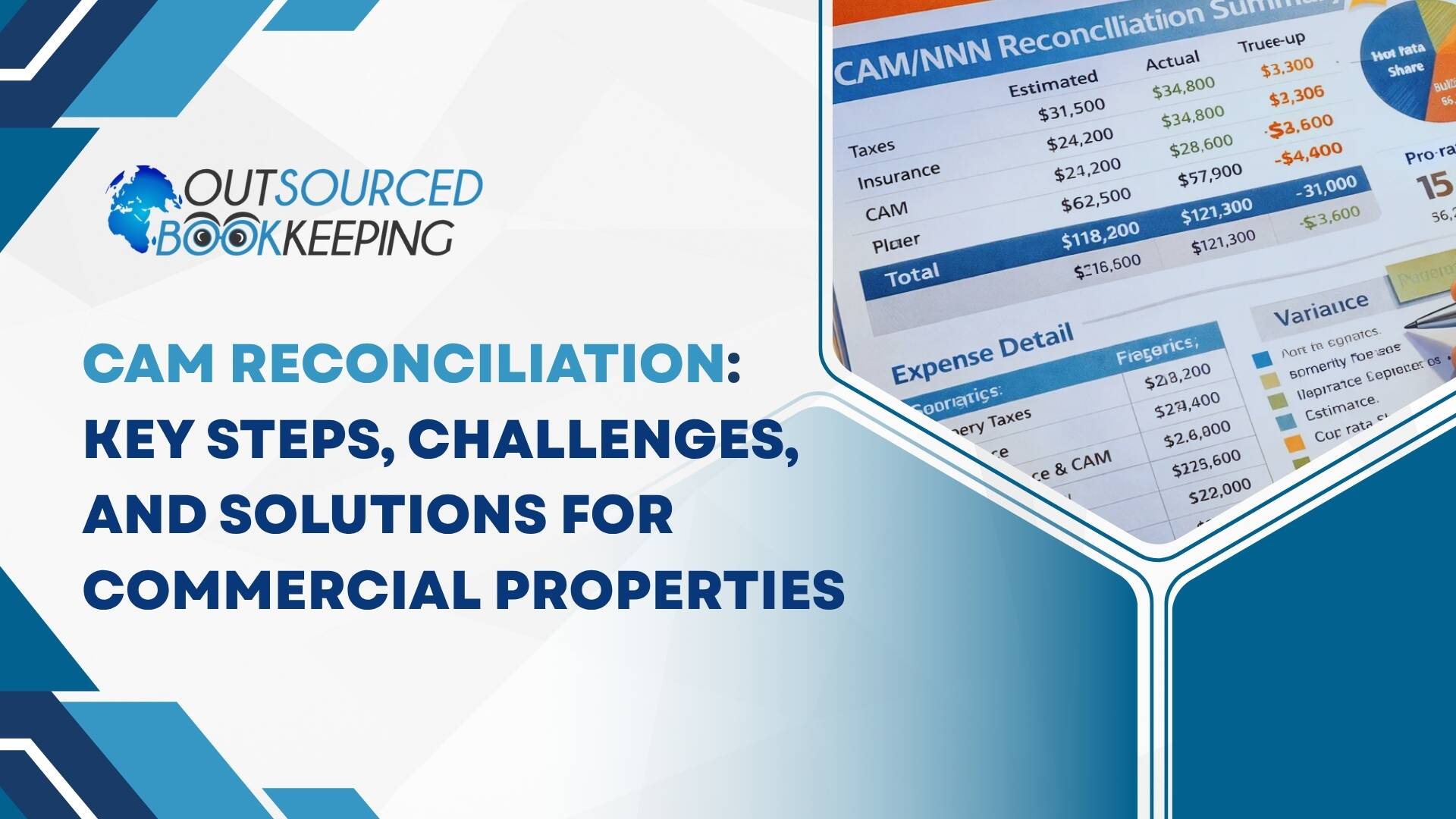
CAM reconciliation is the process of confirming the estimated common area maintenance expenses tenants paid during the year against the expenses actually incurred by the property owner. The process includes and compares items such as landscaping upkeep, parking lot maintenance, snow removal, common area lighting, security, and property management with the monthly invoices sent to tenants.
Landlords collect these fees through monthly escrow payments that accompany base rent, which they draw from the yearly budget. At the end of a year, the landlord will “true up” the accounts. When actual expenses go beyond expectations, the tenant is billed for the shortfall (aka billback). Should actual costs fall below the budgeted amount, the tenant will receive either a credit or a refund.
Controllable vs Uncontrollable CAM Expenses
CAM expenses are divided into two categories:
- Controllable expenses: Controllable CAM expenses are those a landlord can control through vendor negotiations, such as landscaping, cleaning, and small repairs.
- Uncontrollable Expenses: These are those that a landlord cannot control and are passed regardless, such as property taxes, building insurance, and utilities.
This division is important, as many leases place a ceiling on the rate of increase per year for some types of controllable costs, while the rate for some types of uncontrollable expenses usually goes uncapped.
How CAM Reconciliation Differs From Monthly Billing
Monthly CAM charges are estimates that are usually last year’s actual costs with some assumed inflation. CAM reconciliation is when this guesswork becomes reality. The goal, as IREM explains, is to charge tenants fairly for the CAM, according to what the lease actually says, not what a spreadsheet guessed months earlier.
The process is built around the lease agreement rather than speculation. All commercial leases explain which expenses are recoverable and how the tenant’s portion is calculated and, more often than not, include caps, exclusions, or gross-up provisions that alter the calculations.
This information is relevant for landlords, property managers, and tenants, and misunderstanding lease provisions is one of the quickest ways to litigation.
Even the tenant’s share’s square footage is not arbitrary. Most commercial leases reference the BOMA International floor measurement standards as a reference for calculating rentable area.
Why CAM Reconciliation Matters
There are good reasons to do this work and to do it right.
The correct reconciliation means the landlord can collect the costs owed to them rather than absorb costs that should have been recouped from the tenants. Over a large portfolio, trivial errors in reconciliation can result in large losses, either as money left uncollected or as overbilling that triggers tenant pushback.
Such a mistake also negatively impacts tenant relations. Nothing creates more resentment towards the landlord than a reconciliation statement that looks off, shows up late, or is difficult to explain when the tenant questions it.
IREM frames good reconciliation as more than a chore, arguing it actively protects a property’s long-term value rather than just checking a year-end box.
The Compliance and Audit Angle
A contract gives commercial tenants, especially large ones, the right to conduct audits. If you do not keep thorough records, the request will cause an expensive and lengthy inconvenience.
When a property owner seeks a loan or looks for investors, having clear CAM records can help speed up the process. Poor records can genuinely knock down how a property gets valued.
There’s an accounting angle too. Clean reconciliation records support accurate expense recognition under Generally Accepted Accounting Principles (GAAP), and many corporate tenants who report under ASC 842, the lease accounting standard, ask landlords for detailed CAM breakdowns to meet their own financial reporting obligations. Organized records make both sides of that easier.
Key Steps in the CAM Reconciliation Process
- Lease review and preparation. The first step in CAM reconciliation is to review each lease and extract the CAM covenants and any caps, exclusions, base-year, and gross-up clauses applicable to that tenant.
- Collecting and verifying actual expenses. Each direct cost must be extracted from the vendors’ invoices and receipts. If the records were not properly maintained during the year, there will most likely be a large quantity of discrepancies right here.
- Categorizing recoverable vs. non-recoverable costs. Not every single dollar spent can be charged back to tenants. Capital expenditures, marketing costs, leasing commissions for new tenants, legal fees related to the landlord’s business or another tenant’s default, and management fees exceeding the lease cap are typically incurred by the landlord. Confusing the line between recoverable and non-recoverable costs is a main error during this process.
- Calculating the pro rata share. Once the net recoverable expense pool is locked in, each tenant’s pro-rata share is calculated by dividing the tenant’s rentable square footage by the building’s total rentable square footage and multiplying by 100 to get a percentage. That percentage is then applied to the total recoverable expense pool. Square footage is typically referred to as “rentable square footage” and must be accurate and complete per the Building Owners and Managers Association (BOMA) measurement standards before any calculations are made.
- Applying gross-up adjustments where the lease allows it. In a building that is only 70% occupied, variable costs, like trash removal, are proportionally reduced. A gross-up provision permits the landlord to estimate what the costs of those services would be if the building were 95–100% occupied, so the remaining tenants aren’t quietly subsidizing space and the landlord isn’t absorbing a loss either.
- Generating reconciliation statements. The tenants are provided with an estimate of their surplus payment, along with an actual cost statement, including any resulting balance or credit.
- Issuing bills or credits and handling disputes. Statements go out, questions come in. Having documentation in advance makes these communications less burdensome.
- Year-end reporting and next-year budgeting. This year’s actual costs become next year’s CAM estimates, so getting the numbers right here sets the mood for the whole next cycle.
Common Challenges in CAM Reconciliation
Lease and Information Complexity
- Complex, varying lease terms. CAM lease terms won’t be the same across all leases. Working through dozens of leases with different cap structures, exclusions, and base years across a portfolio can quickly become complicated.
- Data inaccuracies and partial records. The absence of records and invoices for CAM or miscoded expenses throughout the year turns into a scramble once reconciliation season hits.
- Manual processes and spreadsheet errors. One erroneous formula can throw off spreadsheets that contain dozens of tenants. IREM’s continuing education catalog includes multi-part courses specifically on building CAM reconciliations in Excel, which says something about how widespread this particular headache is across the industry, according to their Excel automation course listing.
Timing, Disputes, and Scale
- Timing pressures and missed deadlines. Many leases stipulate deadlines for issuing reconciliation statements, and failing to issue them can result in a landlord losing the legal right to collect certain charges in some jurisdictions.
- Tenant disputes and audit requests. Larger tenants often have the right to audit CAM expenses, and responding well takes organized, defensible records on hand.
- Scaling issues for large portfolios. A process that works fine for ten tenants falls apart across a hundred without the right systems behind it.
- Rising costs and inflation impact. Sharp jumps in maintenance and insurance costs can make reconciliation numbers spike in ways that invite more tenant pushback than usual.
Effective Solutions and Best Practices
Technology is especially helpful in these situations. Software like Yardi Voyager, Yardi Breeze, and AppFolio includes features to monitor CAM expenses in line with the current lease terms throughout the year, rather than scrambling when reconciliation hits.
Automating the data collection process reduces a large share of manual errors that create issues in the future. Even something as simple as running a monthly export to analyze actual expenses against the recoverable sections of the lease helps identify issues in advance of the reconciliation process, rather than waiting until then.
Correcting the process is just as important as the software. For example, maintaining a simple checklist and reviewing quarterly (this frequency would be a major improvement from the previous practice of once a year) guarantees uniformity and catches lease-specific quirks before they stack up.
Additionally, training whoever manages CAM to read and apply lease provisions correctly reduces the mistakes that only come to light when a tenant challenges a statement.
Reviewing a sample of expense entries against the lease each quarter is required quality control and worth the time, rather than assuming that the expense categorization from January is correct.
For many owners and managers, the real solution is completely handing this piece off. With lease review, categorization, and reconciliation math, CAM reconciliation consumes a surprising amount of time within commercial property accounting, and during the busy parts of the year, it is all too common for this task to get deprioritized.
Outsourced reconciliation and month-end close support lifts that entire process off a team’s plate, handled by people who work across multiple portfolios and already know where the common mistakes hide.
CAM Reconciliation in Yardi and AppFolio: Best Practices
For most commercial and mixed-use portfolios, Yardi and AppFolio are the main players in the industry, and examining a few of their peculiarities can help improve the reconciliation process.
In Yardi, correctly setting up recovery groups is important from the very beginning of using the system, and this step is more critical than most people think. If you tag an expense to the wrong recovery pool, that mistake will carry forward to the year-end reconciliation. A mid-year check of recovery group assignments catches this early, rather than at the most critical moment.
In AppFolio, the reconciliation step most folks skip is the review and update of the CAM terms to match the lease, which are often overlooked when a lease is amended or renewed. An outdated cap or exclusion left sitting in the system quietly produces wrong numbers for months before anyone catches it.
Whichever platform you’re on, watch for the same trap: letting the software’s default settings carry the reconciliation instead of actively confirming they match each lease’s real terms.
Frequently Asked Questions
What is CAM reconciliation, in simple terms?
Comparing what a commercial tenant paid in estimated maintenance charges against the actual costs for the year, then billing or crediting whatever difference is left.
How often does CAM reconciliation happen?
Usually once a year, though some leases call for interim or mid-year reconciliations depending on how they’re written.
What happens if a tenant disputes their statement?
Most commercial leases give tenants a window to raise questions or formally audit the numbers. Organized, itemized records ready ahead of time make those conversations much shorter.
Can reconciliation errors affect a property’s value?
Yes. Investors and lenders often review CAM recovery history during due diligence, and a pattern of errors or disputes can raise questions during a sale or refinance.
The Bottom Line
CAM reconciliation isn’t very exciting. However, if it is done thoroughly and accurately, it has the benefits of protecting revenue and tenant relationships, as well as keeping a property’s books defensible whenever someone asks questions. Teams that manage these tasks proficiently conduct CAM reconciliation as part of their normal operating procedures throughout the year rather than as an end-of-year blitz.
Outsourced Bookkeeping works across both Yardi and AppFolio portfolios, handling CAM reconciliation, trust accounting, and month-end close so property teams aren’t caught untangling lease terms and spreadsheets every reconciliation season.
Get in touch with our team, and we’ll walk through what CAM support looks like for your portfolio.
About the Author
